
Blog
Legalize an Unpermitted Guest House in Florida: 2026 Guide
Learn how to legalize an unpermitted guest house in Florida with zoning checks, as-built plans, after-the-fact permits, inspections, and final approval.
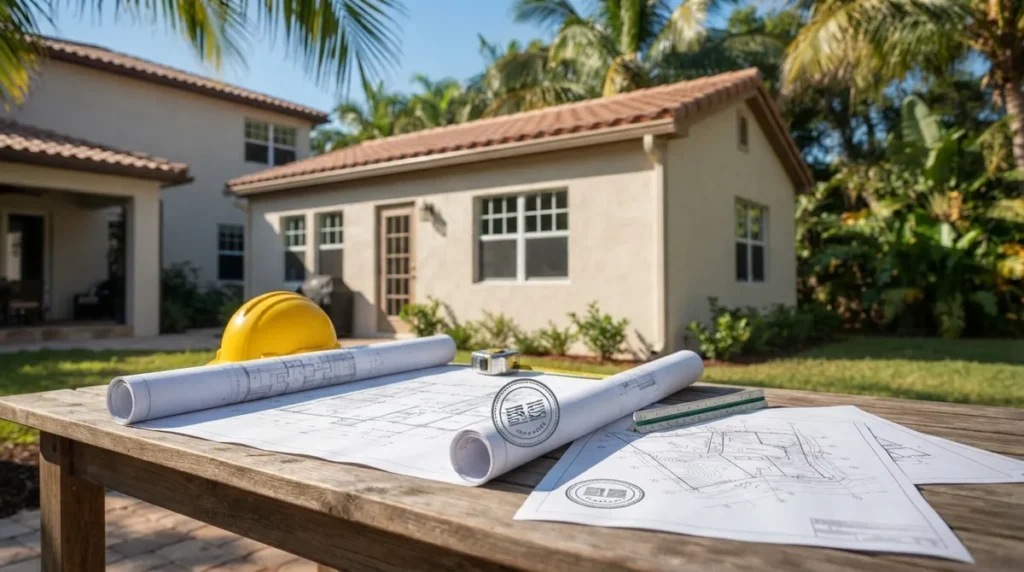
Key Takeaways
-
Legalizing an unpermitted guest house in Florida requires approval for both zoning (use) and building code (construction), handled through your local city or county since there is no statewide program.
-
Confirm which jurisdiction controls your parcel and how it classifies the unit, since guesthouse and ADU definitions differ and determine whether rental is allowed.
-
Check zoning early for second-unit allowances, setbacks, lot coverage, parking, and flood zone rules, because a building can be well built yet still illegal if it violates land-use rules.
-
Order scaled as-built plans (site plan, floor plans, elevations, structural, electrical, plumbing, and mechanical details), since building departments will not accept hand sketches.
-
Expect possible inspections of concealed work; a sealed letter from a Florida-licensed architect or engineer may be accepted in place of opening walls, but acceptance is up to the local authority.
-
Do not occupy or rent the unit until you obtain final approval, such as a certificate of occupancy or certificate of use, as these two documents differ.
So you have a guest house on your Florida property, and somewhere along the way, you learned it was never permitted. Maybe you bought the home that way. Maybe a prior owner built it, or a contractor skipped the paperwork. First, take a breath. You are far from alone, and this problem is very fixable.
If you have been asking yourself, how do I legalize an unpermitted guest house in Florida, the short answer is this: you work with your local city or county to get approval for both the use (zoning) and the construction (building code). There is no single statewide program. Every jurisdiction handles it a little differently, which is exactly why the process can feel confusing.
In this guide, we will walk through the steps in plain English, explain what plans and inspections to expect, and flag the mistakes that slow people down. Whether you are a homeowner, a realtor with a closing on the calendar, or a contractor helping a client, you will leave knowing exactly what comes next.
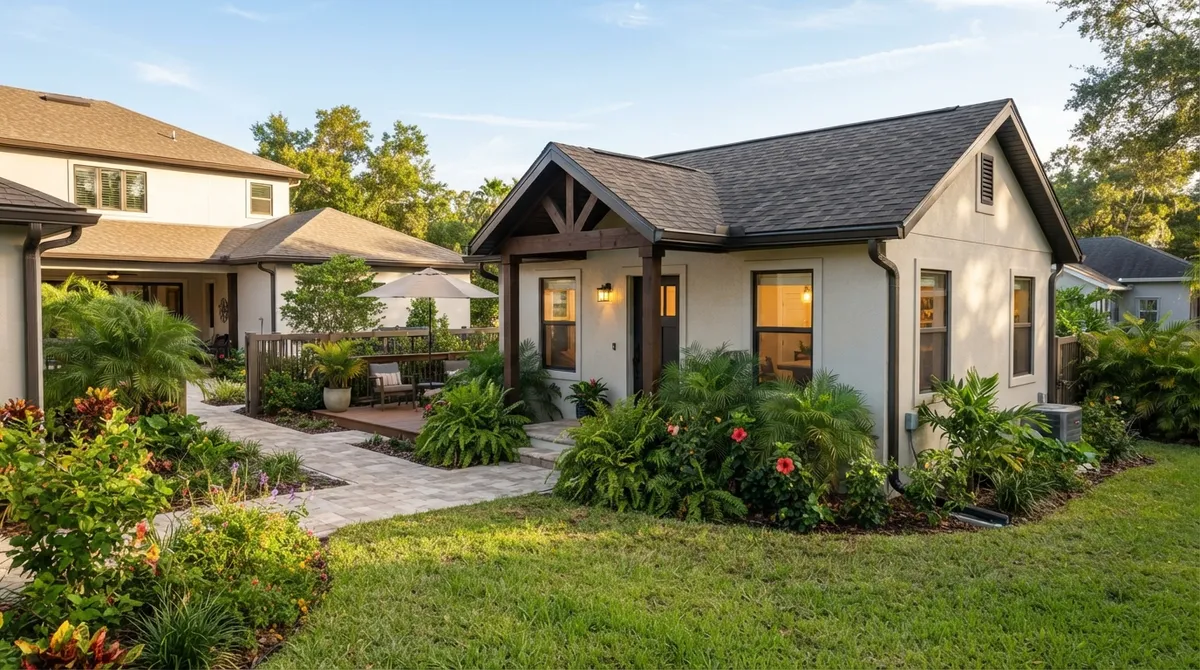
Why Legalizing Your Guest House Matters
An unpermitted structure is more than a paperwork headache. It can quietly cause real trouble down the road. Here is what commonly shows up:
- Closings get stuck. Appraisers, lenders, and title companies often flag unpermitted structures, which can delay or derail a sale.
- Insurance gets complicated. A claim involving an unpermitted structure may be disputed or limited.
- Code enforcement can step in. A neighbor complaint or an inspector's observation can trigger a notice of violation.
- You cannot safely rent or occupy it. Without final approval, using the space may violate local rules.
The good news? Florida Statutes §553.79 generally requires a permit before covered construction, alteration, or repair. That means the way back to compliance is to go through the permit process after the fact. It is a well-worn path, and our team walks owners through it every week. For a deeper look at the broader process, see our guide on unpermitted work in Florida and how to legalize it.
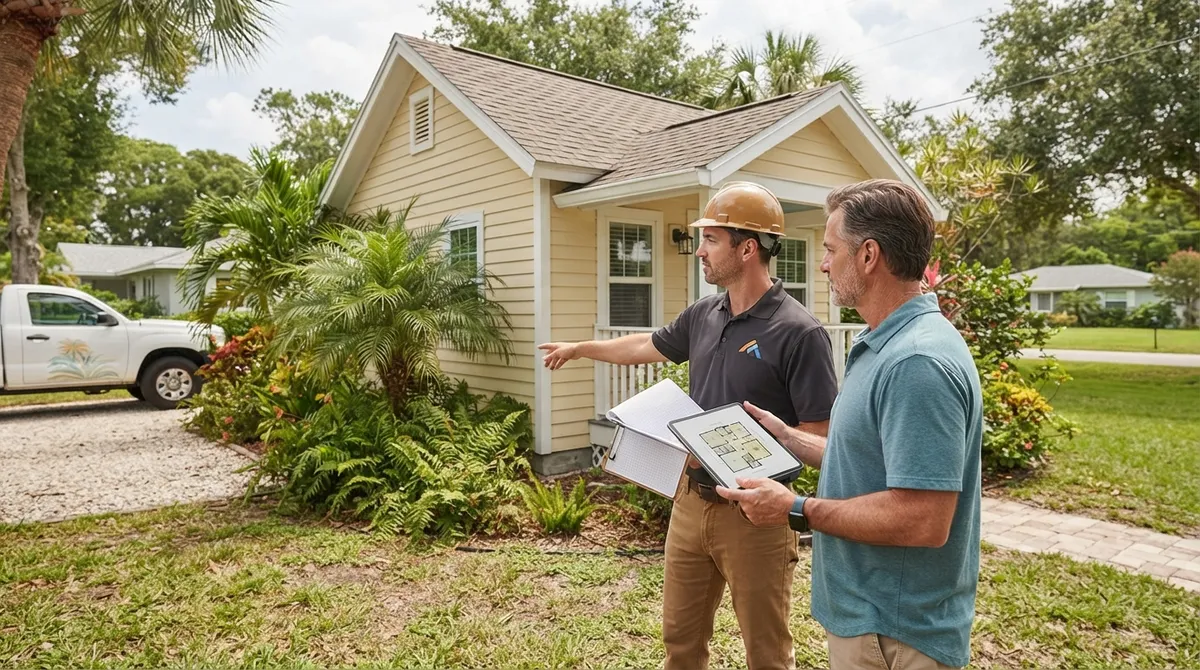
Step One: Figure Out What You Actually Have
Before you file anything, you need to know how your local government classifies the building. This is the part many owners skip, and it matters a lot.
Guesthouse vs. Accessory Dwelling Unit (ADU)
In many places, a guesthouse is meant for occupants of the main home or their visitors, while an accessory dwelling unit may be rented. Florida's §163.31771 defines an ADU as a secondary living unit with a separate kitchen, bathroom, and sleeping area on the same lot. Local ordinances then decide whether, and under what conditions, ADUs are allowed.
| Feature | Guesthouse | ADU |
|---|---|---|
| Typical use | Family and visitors of the main home | Independent living unit, sometimes rentable |
| Kitchen | Often limited or restricted locally | Separate kitchen typically present |
| Rental allowed | Often no | Depends on local rules |
| Local approval | Varies; may need a certificate of use | Varies; zoning approval often required |
For example, Miami-Dade distinguishes guesthouses from ADUs and requires a permanent Certificate of Use for a guesthouse. Other counties use different terms and thresholds. If you need help understanding which applies to you, our building department lookup tool can point you to the right office.
Confirm Which Jurisdiction Controls Your Parcel
Near city lines, it is not always obvious whether the city or the county has authority. Getting this wrong means filing in the wrong place and losing weeks. Our article on which Florida jurisdiction reviews your project explains how to check.
Step Two: Understand the Zoning Hurdle First
Here is something that surprises people: zoning review often comes before, or alongside, building review. A guest house can be perfectly built and still not be legal if it violates land-use rules.
Officials may look at:
- Whether your zoning allows a second residential unit
- Setbacks from property lines
- Lot coverage and building height
- Parking and density
- Flood zone requirements
If the structure violates a setback or counts as a second nonconforming residence, you may need additional zoning approval, redesign, or even partial removal before permits can issue. Miami-Dade's published ADU guidance notes exactly this. Requirements elsewhere in Florida may differ, so always confirm locally.
Step Three: Gather Plans That Document What Exists
This is where most owners need professional help. The building department will not accept a hand sketch. They want scaled drawings that show what is actually on your property today.
Depending on your jurisdiction and project, a submittal may include:
- A site plan showing the lot, main house, guest house, setbacks, and utilities
- Floor plans with room labels, dimensions, and egress
- Elevations showing exterior views and heights
- Structural details for foundation, framing, and roof
- Electrical, plumbing, and mechanical information documenting systems
- Flood and elevation data if the property sits in a flood zone
Miami-Dade's guidance says its process for existing unpermitted ADUs follows the same application process as a new project and identifies these plan elements. That is a helpful benchmark for what to expect statewide.
Our drafting and engineering team prepares these sets in house. You can learn more about our architectural drafting, as-built drawings, and site plan services. If you already have your own engineer, we also offer drafting-only support.
Step Four: File the After-the-Fact Permit
Once your plans are ready, you apply to the local building department for permits covering the unpermitted work. This is commonly called an after-the-fact permit. You are essentially asking the jurisdiction to review and approve work that already exists.
A few things to know about this stage:
- Fees vary by county and city, and some jurisdictions charge higher fees or penalties for work done without permits.
- Reviewers may issue comments requiring corrections, which means revisions and resubmittals.
- Approval is never guaranteed just because the building is already standing.
If you want a realistic picture of timing and cost, take a look at our articles on after-the-fact permit costs in Florida and how long a building permit takes in Florida.
This is also where permit facilitation and filing pays off. Someone has to submit the application correctly, track it, and respond to reviewer comments quickly. Missed comments are one of the most common reasons these files stall.
Step Five: Prepare for Inspections (Yes, Even for Hidden Work)
Here is the part that makes owners nervous. The building department may want to verify construction that is now concealed behind drywall, flooring, or finishes. What happens next depends on the inspector and the jurisdiction.
| Situation | What the Jurisdiction May Require |
|---|---|
| Work is visible and accessible | Standard inspections |
| Framing, wiring, or plumbing is concealed | Exposing components, testing, or documentation |
| Inspector cannot verify construction | Certification or letter from a Florida-licensed architect or engineer |
| Work does not meet code | Corrections or partial removal |
Acceptance of any engineer certification is decided by the local authority. That said, a sealed engineer letter can often save you from tearing open walls. Learn more about engineer letters and our inspections support.
In some cases, you can also use a licensed private provider to perform plan review and inspections instead of waiting in the county queue. Our guide on private provider vs. building department in Florida explains the tradeoffs.
Step Six: Close Out With Final Approval
Passing inspections is not quite the finish line. After required permits and inspections are complete, you need the applicable final approval, whether that is a certificate of occupancy or a certificate of use, before occupying or renting the unit.
These two documents are different, and mixing them up is common. We break it down in our article on certificate of occupancy vs. certificate of use. You can also read about our certificate of occupancy and certificate of use services.
A Quick Roadmap You Can Follow
- Identify your jurisdiction and confirm how it classifies the structure.
- Check zoning for second-unit allowances, setbacks, and flood rules.
- Order accurate as-built plans of the existing guest house and site.
- File the after-the-fact permit and track it closely.
- Answer reviewer comments fast, with revisions as needed.
- Complete inspections and provide engineer documentation if required.
- Obtain final approval before occupying or renting.
What Happens If You Do Nothing?
Ignoring the problem rarely makes it go away. Local code enforcement remedies, fees, and penalties depend on the circumstances and applicable ordinances. Separately, Florida's contracting laws address unlicensed work. For instance, §489.13(3) authorizes an administrative fine of up to $10,000 for unlicensed contracting, and §489.127(2) classifies specified unlicensed contracting violations as first-degree misdemeanors. To be clear, those are not automatic penalties for every owner with unpermitted work. They mostly target unlicensed contractors. But they show how seriously Florida treats work done outside the permit system.
If you have already received a notice, do not panic. Our guide on penalties for building without a permit in Florida and our code compliance violations service can help you respond calmly and correctly.
Special Situations We See Often
You Are Selling or Buying
Unpermitted structures often surface during appraisals and inspections. If your closing is at risk, speed matters. Our realtor and closing support and urgent permit rescue services exist for exactly this moment.
A Prior Owner Built It
Plenty of owners inherit the problem. You did not skip the permit, but you now own the responsibility. We cover this in 4 steps if a prior owner skipped permits in Florida.
You Want to Rent It
Do not advertise or rent the unit until final approval is in hand. Local definitions of guesthouse and ADU often control whether rental is allowed at all. When in doubt, ask your zoning authority before listing it.
Why Professional Help Speeds Things Up
You can try this on your own, and some owners do. But after-the-fact permits tend to stall on the same few issues: wrong jurisdiction, incomplete drawings, missed reviewer comments, and missing engineering. Each one costs weeks.
1 Contractor Solutions acts as Florida's outsourced permitting department. We handle the full chain: confirming the controlling jurisdiction, preparing sealed drawings with our in-house engineer, filing and tracking the application, working every reviewer comment, and carrying it through closeout. We serve all 67 Florida counties, including Miami-Dade County, Hillsborough County, and Sarasota County. See what other clients say on our Google profile for 1 Contractor Solutions, and follow us on LinkedIn for Florida permitting updates.
Ready to Get Your Guest House Legal?
Legalizing an unpermitted guest house takes patience, accurate drawings, and the right local knowledge, but it is absolutely doable. Start by confirming how your jurisdiction classifies the structure, resolve zoning questions early, document the building with scaled plans, and move through permits, inspections, and final approval in order. You will end up with a structure you can insure, sell, and use with confidence.
If you would rather have an experienced team handle the heavy lifting, we are happy to help. Get a free quote and tell us your address, and we will tell you which jurisdiction controls it and what it will take. We respond within 30 minutes, day or night, and se habla español.
FAQs
How do I get an after-the-fact permit for an unpermitted guest house in Florida?
You apply to your local city or county building department with scaled plans of the existing structure, then work through plan review and inspections. Zoning approval often comes first or runs alongside. It is a bit like a new-project application, just for something already built.
Can I legalize an unpermitted guest house if it violates zoning setbacks?
Sometimes, but not automatically. Your local jurisdiction may require additional zoning approval, a redesign, or partial removal before permits can issue. The outcome depends on your parcel and your local rules, so checking early saves a lot of stress.
Will Florida make me open walls for inspections?
Not always. If inspectors cannot verify concealed work, they may ask you to expose components, provide testing, or submit a certification from a Florida-licensed architect or engineer. Whether that certification is accepted is up to the local authority.
Can I rent an unpermitted guest house while I apply for permits?
It is best to wait. You should obtain the applicable final approval, such as a certificate of occupancy or certificate of use, before occupying or renting the unit. Local rules on guesthouses versus ADUs also determine whether rental is allowed at all.
What if I cannot bring the guest house into compliance?
In some cases, the work may need corrections or partial removal to meet code and zoning rules. A permitting professional can review your options early, so you know whether legalization, modification, or another path makes the most sense.
We do this work every day across all 67 Florida counties. Call (866) 314-6931 and we will tell you what your situation actually requires — including when you do not need us.
Related services
Permit Facilitation & Filing
You have a crew scheduled, a client asking for dates, and a permit sitting somewhere in a queue you cannot see. We file it, w…
See the servicePlan Review Coordination
A permit in plan review is not one queue. On a commercial project it can be six queues, each with its own reviewer, its own c…
See the serviceReady to get your permit moving?
One call tells you which jurisdiction controls your project, what it will take, and what it will cost. Most of the time we can scope it on the phone.