
Blog
After-the-Fact Permitting for Florida Property Managers
Found unpermitted work on a managed property? Learn the Florida after-the-fact permitting steps, risks, and workflow property managers need.
Key Takeaways
-
Florida property managers should contact the local building department first, since there is no statewide after-the-fact permit checklist and each jurisdiction sets its own steps, documents, and fees.
-
Get the owner's explicit written authorization before filing, and confirm with the building department whether your management agreement is sufficient or the owner must sign forms personally.
-
Florida code enforcement fines can reach $1,000 per day for a first violation, $5,000 per day for a repeat violation, and up to $15,000 for an irreparable violation, so respond quickly and cooperatively.
-
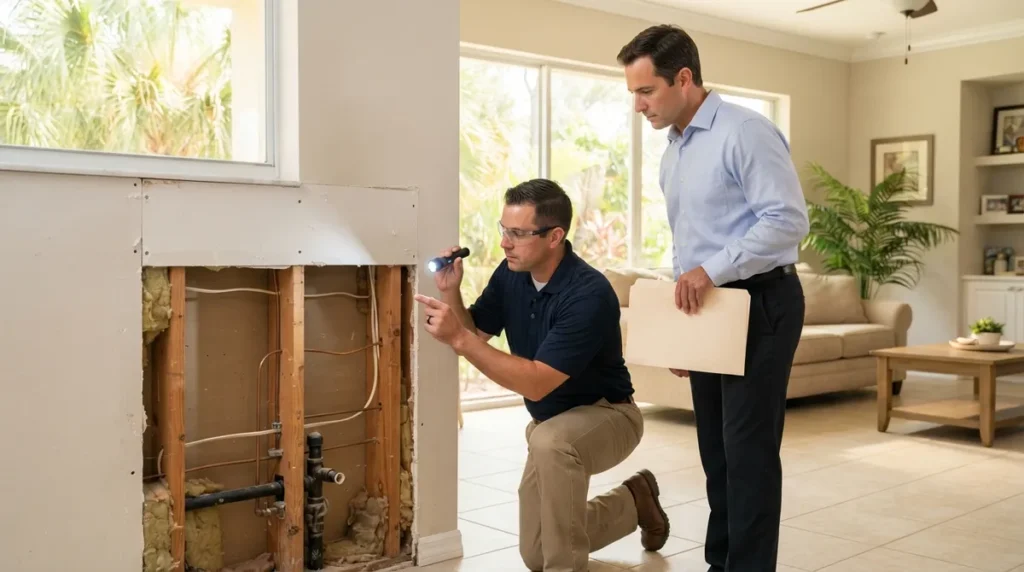
Concealed work behind walls or ceilings may need to be opened for inspection, or verified through photos or an engineer's field verification, so budget time and cost for that possibility.
-
A pending permit application does not authorize continued work; ask the jurisdiction whether work must stop, and follow any stop-work or corrective-action order exactly as issued.
-
Use a repeatable portfolio workflow: inventory suspected work, check permit history, preserve photos and invoices, notify the owner in writing, and retain all permits and final approvals in the property file.
You inherited a building, and now you've inherited its secrets. Maybe a tenant's contractor finished a bathroom remodel without a permit. Maybe a prior owner enclosed a patio, swapped a water heater, or added a carport, and nobody can find a single piece of paperwork. Sound familiar? You are definitely not alone, and the good news is that there is a path forward.
After the fact permitting for property managers in Florida is the process of seeking a permit for work that required one but was started or finished without it. It is handled locally, it varies from jurisdiction to jurisdiction, and approval is never guaranteed. But with the right steps, a calm approach, and the right documentation, most properties can be brought back into good standing.
In this guide, we'll walk through what the law says, how to protect yourself and your owner, what a practical portfolio workflow looks like, and when it makes sense to call in help. Think of this as a friendly roadmap from a team that handles these files every day.
What After-the-Fact Permitting Actually Means in Florida
Florida law generally requires a permit before covered construction, alteration, repair, or demolition begins (Fla. Stat. § 553.79). The local enforcing agency, usually a city or county building department, administers that permit and applies the Florida Building Code plus any local requirements.
When work happens without that permit, the property enters "unpermitted" territory. After-the-fact (ATF) permitting is the local process used to legalize that work, or to confirm it can be legalized. For a deeper dive on the topic, see our guide on what after-the-fact permitting is in Florida.
Here is the part that surprises many managers: there is no single statewide ATF checklist. Every building department sets its own application steps, documentation expectations, inspection sequence, and fee structure. That is why the first call is always to the jurisdiction that actually controls the property.

Why Property Managers Face Unique Risks
Property managers sit in an interesting spot. You do not own the building, but you are often the first person who sees the problem, and the first person the owner calls when something goes wrong. Unpermitted work tends to surface at inconvenient times.
- Turnover and move-outs: You discover a closed-in porch or a relocated wall while preparing a unit for the next tenant.
- Insurance claims: An adjuster notices modifications with no permit history.
- Sales and refinancing: A buyer's inspector or an appraiser flags unpermitted work, and the closing stalls.
- Code enforcement complaints: A neighbor or tenant reports the work, and a notice arrives.
- Inherited portfolios: You take over management of properties with undocumented history.
Each of these situations is fixable. The key is acting before a small paperwork gap becomes a fines-and-deadlines headache.
Know the Stakes: Code Enforcement Fines in Florida
Let's talk honestly about the downside, because understanding it helps you prioritize. Under Florida's code enforcement law (Fla. Stat. ch. 162), statutory fine ceilings can reach:
| Violation Type | Maximum Statutory Fine |
|---|---|
| First violation | Up to $1,000 per day per violation |
| Repeat violation | Up to $5,000 per day per violation |
| Irreparable or irreversible violation | Up to $15,000 per violation |
Please read those numbers as ceilings, not automatic charges. Actual procedures and outcomes depend on the case and the local process. Still, they explain why a quick, cooperative response matters. If you want to see how enforcement typically unfolds, our page on code compliance violations breaks it down.
Step One: Confirm Who Has Authority to Act
Before you file anything, pause and ask: who can legally sign for the owner? Many property managers assume their management agreement is enough. It often is not.
Florida law allows a fee owner's contractor to act with the owner's explicit written authorization in specified permitting contexts. Building departments may also have their own forms and requirements. The safest approach is to:
- Notify the owner promptly and in writing about the suspected unpermitted work.
- Obtain a signed, documented authorization naming you (or your contractor or permitting representative) to apply on the owner's behalf.
- Confirm with the building department whether that authorization is sufficient or whether the owner must sign certain forms personally.
If you are unsure who may pull what, our article on who can pull a permit in Florida is a helpful companion read.
The Property Manager's Portfolio Workflow
When you oversee dozens of doors, consistency saves time and money. Here is a practical, repeatable workflow for handling suspected unpermitted work across a portfolio.
- Inventory the suspected work. Walk the property and list every modification that might have needed a permit: additions, enclosures, electrical changes, plumbing relocations, roof replacements, windows and doors, HVAC swaps, decks, and structural changes.
- Check permit history. Use the jurisdiction's online portal or our open permit search tool to see what is on file, including open, expired, or closed permits.
- Preserve your paper trail. Gather contracts, invoices, plans, photos, prior inspection reports, and any correspondence. Date-stamped photos of the work as it exists today are especially valuable.
- Notify the owner. Put it in writing, explain the risks, and secure written authorization to proceed.
- Identify the right jurisdiction. City lines can be tricky. Our building department lookup helps confirm who actually reviews your address.
- Engage licensed professionals. Bring in properly licensed contractors, designers, or engineers where the department requires plans or sealed documents.
- Submit the local application and coordinate inspections. Follow the department's exact process and respond quickly to comments.
- Retain everything. Keep the permit, inspection records, and final approval in your property file. You will be glad you did at the next sale or refinance.
What Documents Might the Building Department Ask For?
Because requirements are local, treat this as a typical list rather than a guarantee. Your department may ask for some, all, or additional items.
| Document | Why It Is Often Requested |
|---|---|
| Owner authorization or notarized forms | Confirms who may apply and sign |
| As-built drawings or floor plans | Shows what was actually built |
| Site plan or survey | Verifies setbacks and placement |
| Product approvals | Confirms windows, doors, roofing, and similar products meet code |
| Engineer letter or sealed drawings | Verifies structural or system compliance |
| Photos and invoices | Documents the scope and timeline of the work |
| Contractor license information | Confirms who performed or will correct the work |
If you need drawings that reflect existing conditions, our as-built drawings and engineer letters services are built for exactly this.
What to Expect from Inspections
Here is where honesty helps. Building inspectors verify code compliance, and they can only approve what they can see or otherwise confirm. If work is concealed behind drywall, ceilings, or finishes, the inspector may not be able to verify it.
In those cases, the local building official may require one or more of the following:
- Opening a section of wall or ceiling to expose framing, wiring, or plumbing.
- Providing photographic documentation or an engineer's field verification.
- Making corrections so the work meets current code.
The exact remedy depends on the building official and the project circumstances. Going in with a realistic mindset, and a professional who knows how inspectors think, makes the experience far smoother. For more detail, read about what happens during a Florida ATF site inspection.
Can Work Continue While the Application Is Pending?
This is one of the most common questions, and the answer is: don't assume it can. A permit application does not by itself establish that the work complies, and it does not authorize continued work.
If work is ongoing, ask the jurisdiction directly whether it must stop pending permit review and inspection. If you have received a written stop-work or corrective-action order, follow it to the letter. Violating a stop-work order can make a manageable situation much worse. If you are already in that situation, our guide on how to clear a stop work order in Florida can help.
A Quick Word on Private Providers
You may have heard about Florida's private provider option under Fla. Stat. § 553.791. It allows eligible plan review and building-code inspection services to be performed by qualified private providers, which can shorten timelines on the right project.
Two important clarifications for property managers:
- A private provider is not a substitute for obtaining the required permit.
- Eligibility, notice, documentation, and fee treatment should be confirmed with the local enforcement agency before you rely on it.
For qualifying commercial projects, the statute provides fee reductions of at least 25% for the portion attributable to plans review or inspections, or at least 50% when all required review and inspection services are privately provided. Applicability and calculation depend on the statute and the project. Learn how this compares in private provider vs. building department in Florida, or explore our private provider inspections service.
Approval Is Not Guaranteed, So Plan for Options
It would be unfair to promise that every unpermitted structure can be legalized. Some work may need corrections, partial modification, or in rare cases removal if it cannot meet code or zoning requirements. The point of ATF permitting is to find out what is possible and pursue the most practical, compliant outcome.
That is why early evaluation matters. Knowing whether a structure can be legalized as-is, corrected, or must be removed lets you give your owner real numbers and real timelines instead of guesses. Our article on after-the-fact permit costs in Florida covers what typically drives the budget.
Common Mistakes Property Managers Make
After years of working these files, a few patterns show up again and again. Avoid these and you are already ahead of the game.
- Waiting too long. Hoping nobody notices rarely works, and fines can accrue while you wait.
- Skipping the owner. Filing without documented authorization can create delays or liability.
- Assuming one county's rules apply everywhere. Procedures differ across Florida's 67 counties and hundreds of municipalities.
- Hiring unlicensed help. Using an unlicensed person to "clean it up" can add a second problem on top of the first.
- Throwing away records. Old invoices and photos can be gold when you need to prove scope and timeline.
When to Call a Permitting Professional
You do not have to figure all of this out alone. Consider bringing in help when:
- You have received a code enforcement notice or stop-work order.
- A sale, refinance, or insurance claim has a deadline attached.
- The work involves structural, electrical, or life-safety elements that may need sealed drawings.
- You manage multiple properties across different Florida jurisdictions.
- The permit history is unclear, expired, or open with no final inspection.
1 Contractor Solutions acts as Florida's outsourced permitting department. We handle after-the-fact and expired permits, prepare as-builts and sealed engineering with our in-house team, coordinate plan review, and carry files through inspection and closeout. See our dedicated page for property managers, and our service overview for after-the-fact and expired permits. We respond within 30 minutes, and you can see what clients say when you visit us on Google — 1 Contractor Solutions.
Helpful Resources and Next Steps
Staying informed makes every step easier. You can follow us on LinkedIn or follow us on Facebook for Florida permitting updates. For official statutory text, the Florida Legislature publishes the current law, including Florida Statutes Chapter 162 on code enforcement.
Always verify current requirements directly with the building department for your property's jurisdiction, since local procedures, fees, and forms can change.
Wrapping Up: You've Got This
Unpermitted work feels stressful, but it is a very solvable problem. Document what you find, involve the owner, confirm authority, contact the right jurisdiction, and build a clean compliance file. With patience and the right support, after-the-fact permitting for property managers in Florida can turn a looming liability into a closed, documented, protected asset.
If you have a property with a permit problem right now, we would love to help you sort it out. Reach out and get a free quote today, and let our team take the permit off your plate so you can get back to managing.
FAQs
How do I get an after-the-fact building permit in Florida?
Start by contacting the building department for the property's jurisdiction, disclose the work and its status, and ask for their ATF application, documentation, inspection, and fee requirements. Expect to provide items like owner authorization, as-built drawings, and possibly engineering. Because procedures vary by city and county, always confirm the details locally.
Can a Florida property manager apply for a permit on behalf of the owner?
Often yes, but only with proper documentation. Get the owner's explicit written authorization and confirm with the building department whether your management agreement is enough or if the owner must sign certain forms. Never assume management authority alone will be accepted.
Can a Florida building department require walls or ceilings to be opened for inspection?
Yes, it can. If an inspector cannot verify concealed work, the local building official may require exposing it or providing other documentation, such as an engineer's field verification. The exact remedy depends on the official and the circumstances of the project.
Can work continue while an after-the-fact permit application is pending?
Don't assume so. A pending application does not authorize continued work or prove the existing work complies. Ask the jurisdiction whether work must stop, and follow any written stop-work or corrective-action order exactly as issued.
What are the penalties for unpermitted work in Florida?
Under Florida Statutes chapter 162, code enforcement fines can reach up to $1,000 per day for a first violation, $5,000 per day for a repeat violation, and up to $15,000 for an irreparable violation. These are statutory ceilings, not automatic amounts, and actual outcomes depend on the local process and the specific case.
We do this work every day across all 67 Florida counties. Call (866) 314-6931 and we will tell you what your situation actually requires — including when you do not need us.
Related services
Permit Facilitation & Filing
You have a crew scheduled, a client asking for dates, and a permit sitting somewhere in a queue you cannot see. We file it, w…
See the servicePlan Review Coordination
A permit in plan review is not one queue. On a commercial project it can be six queues, each with its own reviewer, its own c…
See the serviceReady to get your permit moving?
One call tells you which jurisdiction controls your project, what it will take, and what it will cost. Most of the time we can scope it on the phone.